Tiny Traveler, Big Adventure: The SBV Guide to Cruising With an Infant
Your complete guide to cruising with an infant, from the documents your baby needs to sail to the packing list that saves boarding day.
BEYOND
VACATIONS
THE SBV GUIDE TO CRUISING WITH AN INFANT
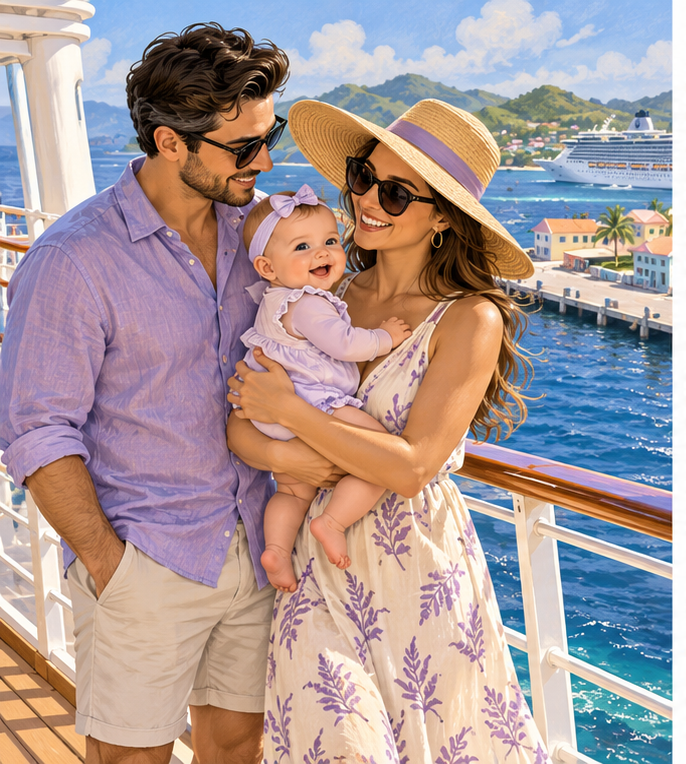
Yes, you can trade your usual view for ocean views with a baby in tow. The trick is choosing the right ship, packing the things you cannot replace onboard, and leaving room in the schedule for naps, snacks, and the occasional outfit emergency.
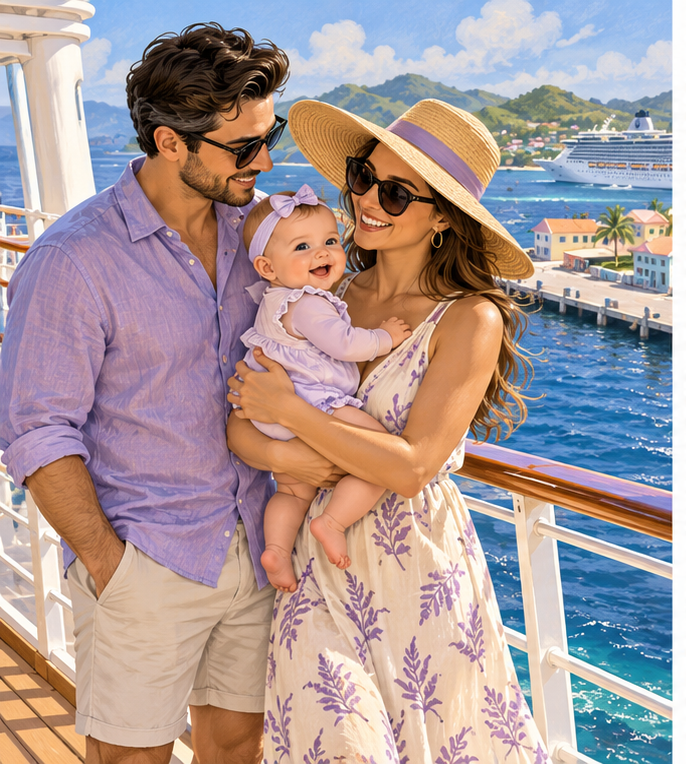
A little planning. A lot more vacation.
This guide focuses on Royal Caribbean, with extra tips for Utopia of the Seas, Nassau, and Perfect Day at CocoCay. Other cruise lines have different age rules, childcare, and facilities, so check your exact sailing before booking.
Inside: age limits and documents, packing, safe sleep, feeding, nursery time, shows, and beach days. Think of it as your baby cruise shortcut, minus the suitcase full of unnecessary gadgets.
POLICIES CHECKED OCTOBER 4, 2026 | ILLUSTRATIONS ARE CONCEPTUAL
Before you book: baby gets a ticket, too
How old does baby need to be?
Royal Caribbean requires infants to be at least 6 months old on the first day of the cruise. The minimum rises to 12 months for transatlantic, transpacific, Hawaii, select South American and other selected itineraries, plus sailings with three or more consecutive days at sea. A birthday during the cruise does not qualify baby for boarding. [1]
Choose the ship and cabin around your family
Look for a nursery and a designated baby splash area; neither is universal across cruise ships. Utopia has both. Ask SBV for a cabin away from late-night venues and deck noise, with enough usable space for a crib. A balcony can be lovely during nap time, but keep furniture away from railings, secure the door, and supervise constantly.
Include baby on the reservation from the start. Infants count toward cabin capacity and may have a cruise fare, taxes, fees, and gratuities. A promotional child fare does not automatically make the entire trip free. Ask for the complete family price.
The documents belong in your carry-on
A passport book for every traveler, including baby, is the easiest option and supports international air travel if you need to get home early. Royal recommends passports valid for at least six months after the cruise ends; check itinerary-specific requirements. [2]
For qualifying U.S. round-trip sailings, a U.S.-born citizen infant may use an original government-issued, state-certified birth certificate. Hospital keepsakes and photocopies do not qualify. Guests 15 and under do not need the extra photo ID when using this accepted option. Do not assume it works for every itinerary or nationality. [3]
If baby travels without a parent/legal guardian, Royal requires notarized authorization. Bring documents linking differing parent/child names, and confirm consent or custody requirements for one-parent travel and each destination. Keep originals, boarding passes, and emergency contacts with you. [2]
Pack the essentials. Leave room for souvenirs.
Your carry-on is the survival kit
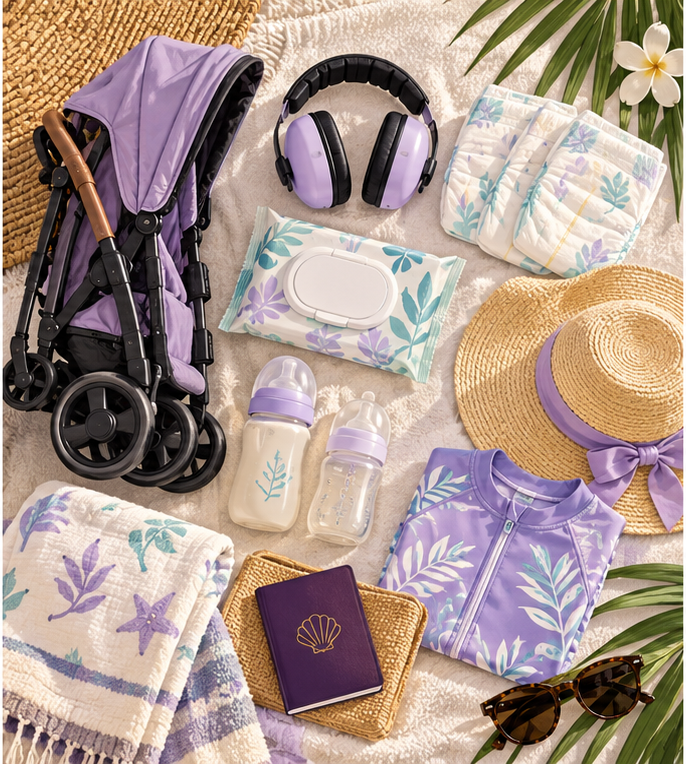
Pack about 48 hours of diapers, wipes, formula or feeding supplies, medicines, bibs, spare outfits, and a change of clothes for you. Split the remaining essentials between bags. Checked luggage may reach your cabin later than you do.
Bring more of the things baby cannot do without
Add roughly 25-30% extra diapers, wipes, and formula for delays and surprise messes. Royal does not sell diapers or supply formula onboard. Bring familiar, sealed baby snacks and pouches; check rules before taking food ashore. A few small toys and a favorite teether go further than a whole toy chest. [4]
The small items that earn their suitcase space
A wipeable changing pad, diaper disposal bags, wet bag, compact hamper, bibs, battery nightlight, portable white-noise machine, infant hearing-protection earmuffs, and a guarded stroller fan make daily routines easier. Hearing protectors reduce exposure; they do not make every loud event suitable for baby.
Bring a compact folding stroller and a properly fitted carrier. Keep stroller storage inside your cabin and carrier positioning upright, with baby's face visible and airway clear. Do not hang heavy bags from stroller handles or leave small batteries, hooks, or cords within reach.
Make the cabin work for you
Request the crib before you sail
Royal offers complimentary cribs on request and supplies a fitted sheet. Its published limits are 30 lb or less and 35 inches or shorter; also follow the actual crib's instructions. Confirm availability before departure and inspect the setup onboard. If you bring a spare sheet, make sure it fits that specific model. [4]
Keep sleep simple and safe
Place baby on their back on the crib's firm, flat original sleep surface, with a fitted sheet only. No mattress topper, extra pad, pillows, loose blankets, or toys. Skip improvised crib covers and blackout tents. A darker cabin and low lighting can help without enclosing the crib. Move a sleeping baby from a stroller or carrier to a safe sleep surface as soon as practical. [5]
A clear walkway beats a clever layout
Ask your attendant to help position the crib away from cords, curtains, and balcony access while keeping the bathroom route and exit clear. Cabin layouts vary, so there is no single sofa-and-desk placement that fits every room. Ask whether a small table can be removed rather than moving furniture yourself.
Use a collapsible hamper and a clip hanger for rinsed bibs if there is a suitable drying spot. Magnetic hooks can be handy where surfaces allow them, but keep them low, secure, and away from baby. The advertised pull rating does not guarantee holding strength on a cabin wall.
Bath time, cruise style
Most standard cabins have showers, so a small inflatable infant tub may help if it fits. Keep baby within arm's reach, empty the tub after use, and store it clear of walking space. A battery-operated amber nightlight keeps midnight changes calmer; do not rely on candles or unapproved heating appliances.
Bottles, milk & meals without the scramble
Make a feeding plan before embarkation
Bring your usual formula, bottles, pump parts, dish soap, bottle brush, a dedicated wash basin, and an air-drying setup. Ready-to-feed formula can simplify outings if it suits baby. Do not count on public microwaves or crew access to sanitize your supplies; arrange a workable cleaning method before sailing. [6]
Prepare formula with safe water, exact label proportions, and your pediatrician's guidance. Cafeteria hot water is not guaranteed to be boiling or at the temperature needed for powdered formula precautions. Bottles do not have to be warmed, and milk should never be microwaved. Keep hot water well away from baby. [7]
Treat milk like food, not a cabin beverage
Request a small medical refrigerator for breast milk before sailing and verify it maintains 40°F / 4°C or colder. Do not assume a beverage cooler is adequate. Bring a thermometer and an insulated cooler with frozen packs for transit. Royal currently allows enough breast milk for the first day; coordinate larger quantities or special needs in advance. [4,8]
Fresh expressed milk: up to four hours at 77°F or cooler, or four days refrigerated; an insulated cooler with frozen packs can hold it up to 24 hours. Use warmed milk within two hours. Prepared formula: use within two hours of preparation and one hour after feeding starts; refrigerate promptly if not used, and use within 24 hours. Discard feeding leftovers. Hot port days shorten your margin. [7,8]
Ask for easy meals, not a special kitchen promise
Request a highchair and ask for soft, plain foods appropriate for baby's stage: oatmeal, mashed vegetables, or soft fruit. Bring familiar backups; custom purees are not guaranteed. Pack a silicone placemat and bib. Breast milk or formula remains the main milk drink until 12 months; cow's milk is not a substitute for an infant bottle. [4,9]
On boarding day, speak with dining staff about an earlier seating and a quicker meal pace. Order baby's food early and be willing to finish with dessert to go. The app is useful for schedules; it does not guarantee a dining-service messaging channel.
Utopia with a baby: play, shows & grown-up time
Visit the nursery early
Utopia's Royal Babies & Tots Nursery serves ages 6-36 months for an additional fee. Visit during the advertised boarding-day registration hours, ask about rates and availability, and reserve around the shows or dinner you want most. Hours, prices, and booking limits can change. [10]
Ask what feeding supplies and diapers to bring, how milk must be labeled, how staff contact you, and which illness policies apply. Also ask whether parent-supervised play sessions or toy lending are offered on your sailing. Treat those as a bonus, not a guaranteed service.
One big outing at a time
Central Park can be a pleasant stroller walk when conditions are comfortable. Check the daily schedule for quiet, family-accessible areas. An empty lounge is not automatically an approved crawling space; use a clean mat only where staff permit it, and watch for glass, furniture edges, and other guests.
For family-friendly shows, choose an aisle seat near an exit. AquaTheater productions and deck parties can be loud, so pack infant earmuffs and leave if baby seems uncomfortable. Adult-only comedy and events still have age restrictions. Nursery time is an easy way for the adults to enjoy a louder or later show.
The Boardwalk carousel is a fun stop. Ask the operator which seating is appropriate for baby and follow riding rules. A carrier can help through crowded areas, but plan extra elevator time with the stroller and avoid rushing on stairs.
Know where baby is welcome
The Solarium is an 18+ area; do not plan a babywearing stroll there. For water play, non-toilet-trained children may use only designated Baby Splash facilities onboard. Utopia is on Royal's approved list. Swim diapers do not allow entry into regular pools, hot tubs, or the rest of Splashaway Bay. Follow posted signs and staff directions. [11,12]
Beach days, port plans & staying well
Shade first. Short outings second.
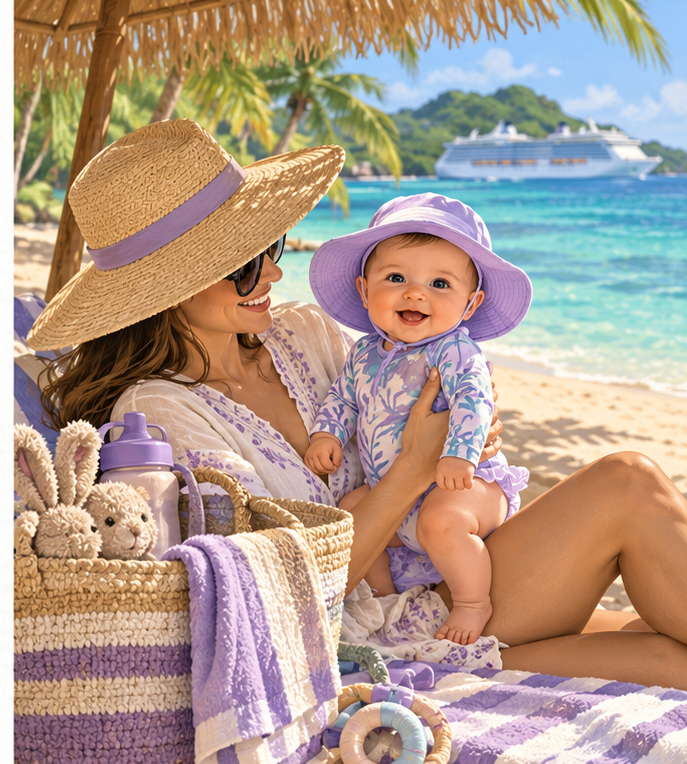
Pack a sunhat, UPF clothing, and breathable shade. From 6 months, use sunscreen on exposed skin and reapply as directed. Under 6 months, prioritize clothing and shade; ask your pediatrician about sunscreen if those are unavailable. Never cover a stroller with a blanket or leave baby sleeping unattended in a beach tent. [13]
At CocoCay, use available trams when helpful and ask how to manage your stroller. Choose family-accessible beaches, check water conditions, and keep baby within arm's reach. Natural ocean water does not have the ship's pool rule, but island pools and splash attractions have their own restrictions. Do not assume swim diapers are allowed everywhere. Hideaway Beach is adults-only. [11]
Plan Nassau transportation before you step ashore
Arrange a correctly installed, age-appropriate rear-facing car seat for car and van rides. A taxi exemption or relaxed local practice does not make lap travel safe. Bring your seat or reserve a provider that confirms the correct seat and installation. If compatible transport is unavailable, choose a different outing. [14]
Pack a small health kit and a backup plan
Bring a thermometer, saline drops, nasal aspirator, oral syringe, diaper cream, and prescribed medicines in labeled containers. Ask your pediatrician for weight-based fever-medicine instructions; ibuprofen is generally for ages 6 months and older unless directed otherwise. Skip benzocaine/lidocaine teething gels and teething jewelry. [15,16]
Ship medical care has limits and is usually billed separately. Review travel protection for baby, including overseas treatment and evacuation. Wash hands with soap and water, follow illness reporting guidance, and seek medical help for breathing trouble, unusual lethargy, dehydration, or a concerning fever.
Your boarding-day shortcut
A few first-day jobs set up the rest of the cruise. Then you can get back to the important things: ocean views and tiny vacation outfits.
Before leaving home
- ☐ Confirm baby's age eligibility, reservation, documents, and transfers.
- ☐ Confirm the crib and milk refrigeration requests.
- ☐ Pack the 48-hour essentials bag and medicine instructions.
- ☐ Download the cruise app and keep emergency contacts handy.
Once onboard
- ☐ Complete the ship's required safety briefing with your family.
- ☐ Visit nursery registration during its posted hours.
- ☐ Check crib setup and refrigerator temperature.
- ☐ Ask dining staff about highchairs, food needs, and pacing.
- ☐ Find the designated Baby Splash area and read its rules.
Sources & useful links
Policies and health guidance checked October 4, 2026. Reconfirm sailing-specific requirements before travel. This guide supports planning; your pediatrician should advise on baby's individual health needs. Illustrations do not depict exact ship facilities.
Ready for baby's first sea adventure?
Book with Somewhere Beyond Vacations and let your SBV Vacation Navigator help you choose the right ship, cabin, and itinerary for your littlest traveler. somewherebeyondvacations.com